
English| EUR
Suggested for you
More currencies
Choose a language
Two of Lower Manhattan's most photographed districts sit so close that visitors often cross from one into the other without noticing. This is the practical explanation of where Little Italy ends, where Chinatown begins, and why the line keeps moving. Every figure here comes from the neighborhood's own published details.
Quick answer
Yes — Little Italy is directly adjacent to Chinatown, sharing a border along Canal Street in Lower Manhattan. Little Italy centres on Mulberry Street, New York, NY 10013, and both are open public streets with free entry at 0 USD. The caveat: Chinatown has absorbed much of historic Little Italy, so the modern Italian core is only a few blocks deep.
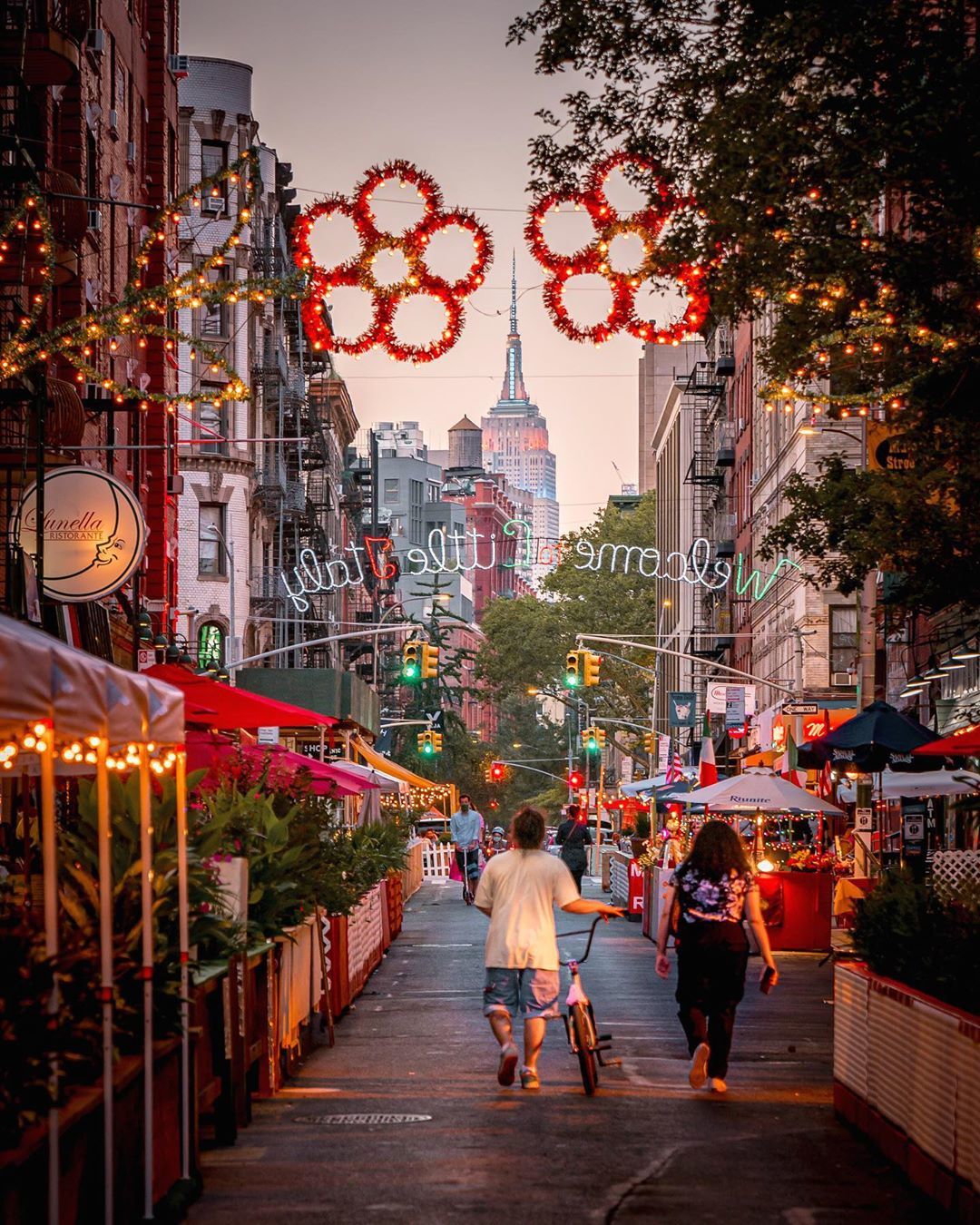
In 1950, Little Italy covered roughly fifty blocks of Lower Manhattan and housed tens of thousands of Italian-born residents. Today the residential Italian population numbers in the hundreds, and the district that carries the name is compressed into a short spine of Mulberry Street. Anyone asking is little italy near chinatown is really asking about a boundary that has been redrawn by demographics rather than by any map office. The two neighborhoods do not merely sit near one another — they interlock, and in several blocks they occupy the same buildings. The practical geography rewards a little context. Canal Street functions as the traditional dividing line, with Chinatown pressing north across it and the Italian storefronts holding the stretch above. Mulberry Street is the axis visitors picture: red-white-green banners, sidewalk tables, the San Gennaro feast staging ground each September. Walk two blocks east onto Mott Street or Bayard Street and the signage switches to Cantonese and Fujianese. Columbus Park, the Church of the Transfiguration and the old Five Points ground sit inside this overlap, which is why a manhattan chinatown and little italy walking tour can cover both without a single transfer. The Little Italy Historic District designation, granted in 2010, formalised what was left rather than what once was — a detail most visitors miss. What should a traveller do with this answer? Treat the pair as one destination rather than two stops. The streets are a public area accessible at all times, which means the neighborhoods themselves impose no schedule; the shops, bakeries and dim sum halls set their own. Plan a loop instead of a straight line: down Mulberry, east through the Chinatown blocks, back up via Elizabeth Street and the boutiques of Nolita. Those researching is little italy near chinatown for a half-day itinerary will find the compressed scale is the point — the density of Lower Manhattan landmarks per block here is unmatched anywhere above Houston Street. Verify hours for individual businesses before setting out, since the neighborhood's official site at littleitaly.com lists events but not every merchant.
“The two neighborhoods do not merely sit near one another — they interlock, and in several blocks they occupy the same buildings.”
Little Italy and Chinatown are immediately adjacent, allowing visitors to easily walk between the two districts in a single visit. Understanding how these neighborhoods connect helps in planning an efficient route through these distinct yet neighboring areas.
| Little Italy Chinatown | Neighborhood District | |
|---|---|---|
| Neighborhood | Little Italy | Chinatown |
| Distance from each other | 0 feet (adjacent) | 0 feet (adjacent) |
| Primary characteristics | Concentrated on Mulberry Street | Sprawling historic blocks |
| Vibe | Italian heritage | High-density commercial |
Verdict: Because these neighborhoods share borders, it is recommended to explore both in one trip rather than choosing between them.
Little Italy is located directly adjacent to Chinatown, making it simple to navigate between the two neighborhoods by foot. The primary destination for both areas is Mulberry Street, New York, NY 10013, which is well-served by multiple public transit options.
6 train to Canal Street Station
N, Q, R, W trains to Canal Street Station
From Chinatown via Mott or Mulberry Street
M103 to Bowery/Kenmare St
The neighborhood is a public area accessible at all times, with a best arrival window of 00:00–23:59. Walking is the most effective way to transition between the districts as they share immediate borders.
Little Italy and Chinatown sit adjacent to one another, allowing visitors to transition between distinct culinary traditions within a few city blocks. This proximity makes it practical to sample Italian pastries on Mulberry Street and dim sum in Chinatown during a single visit.
café
Located on Grand Street in the heart of Little Italy, this long-standing venue specializes in cannoli and espresso.
restaurant
A basement-level establishment on Mott Street in Chinatown, known for traditional Cantonese-American dishes.
market
This Italian specialty store on Grand Street provides artisanal cheeses and cured meats for a picnic-style meal.
street
Situated on Eldridge Street in Chinatown, this venue offers accessible dumplings and scallion pancakes.
The best arrival window is 00:00–23:59, as the neighborhood is a public area accessible at all times. Visiting during weekday mornings provides the most space to navigate the streets of both Little Italy and Chinatown before peak lunch and evening activity.
—
Experience the districts while local shops prepare for the day.
Mild 65-80°F
Pleasant temperatures allow for comfortable walking between neighborhoods.
Cool 55-70°F
Clear skies and mild weather create ideal conditions for exploring public streets.
—
The streets reach peak capacity with high foot traffic near restaurants.
Verdict: Tuesday to Thursday mornings in May, June, September, or October offer the most balanced experience for exploring the area.
Everything you need to know about is little italy near chinatown
Yes, Little Italy is directly adjacent to Chinatown in Lower Manhattan, with the neighborhoods overlapping along Mulberry and Canal Streets. Visitors can easily walk between them in a matter of minutes to experience both cultural districts.
The areas are well-connected by local subway lines including the 6, J, N, Q, R, and W trains. Walking is often the best way to transition between the historic streets of both neighborhoods.
Many culinary guided walks integrate both areas because they share a border. Exploring these neighborhoods together allows guests to compare the diverse heritage and distinct culinary traditions of each district.
The neighborhood is a public area accessible at all times, so you can explore whenever suits your schedule. Since the streets are open daily from 00:00–23:59, you have maximum flexibility for your visit.
Yes, the neighborhoods are pedestrian-friendly and offer a great opportunity to explore local culture with children. The streets are public thoroughfares, making it easy to navigate at your own pace throughout the day.
There is 0 USD entrance fee to the neighborhood streets as they are public areas. You are free to walk through and explore these landmarks without purchasing a ticket to enter the districts.
7 Flavorful Tastings Tour
Read more Tickets & tours6 Flavorful Dishes Tour
Read more Tickets & toursTop Rated Food Tours
Read more GuideThings to Do in Chinatown and Little Italy
Read more Tickets & toursNYC Chinatown & Little Italy Food Tour
Read more Tickets & toursSan Francisco Chinatown & Little Italy Food Tour
Read more Tickets & toursLower East Side, Chinatown & Little Italy Food Tour
Read more